

An Ounce of Prevention…
1/24/2022 - By Dr. Paul Giordano
The holidays are over and it’s a brand-new year. That means new opportunities, new challenges and a shed full of products from Early Order Programs waiting to be put to good use. This past year was different than the others. Global shortages on raw materials and rising fertilizer costs, combined with supply chain gridlocks, made it imperative to secure product needs and hopefully lock-in reasonable pricing for your agronomic programs in 2022. As we commence into a new year, I’d like to share some early-season disease management strategies that should help keep your turf healthy and thriving and allow you to put those precious (and valuable) fungicides to their most efficient and effective use.
Late-Winter Woes
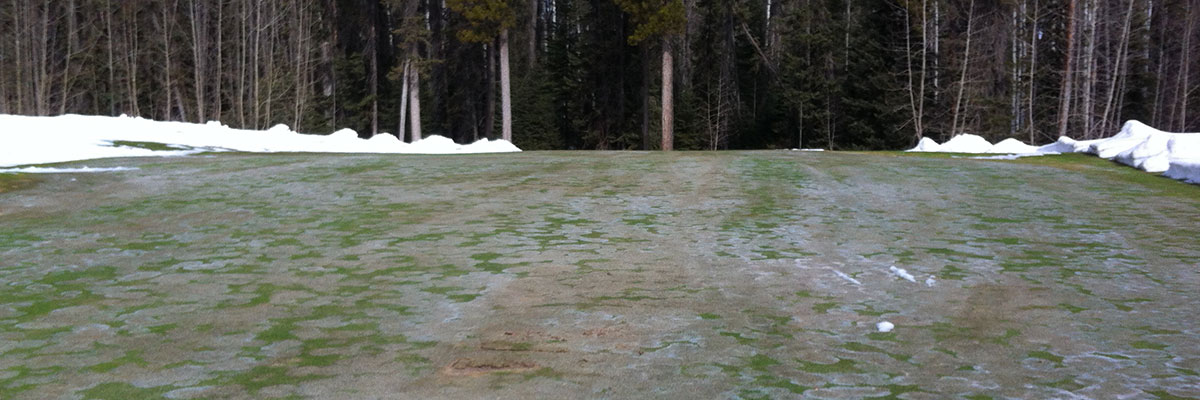
Weather variations throughout winter often dictate the persistence and longevity of our fungicides. When turf is bare, with no snow cover and rainfall is relatively frequent, the chances of fungicides providing control against a late-winter outbreaks of diseases like Microdochium patch (pink snow mold) decreases significantly. Some areas of the US like Chicago, IL set records for the latest measurable snowfall of the season. This sort of seasonal abnormality leaves the turf exposed to the elements and will likely have negative effects on fungicide efficacy in February/March.
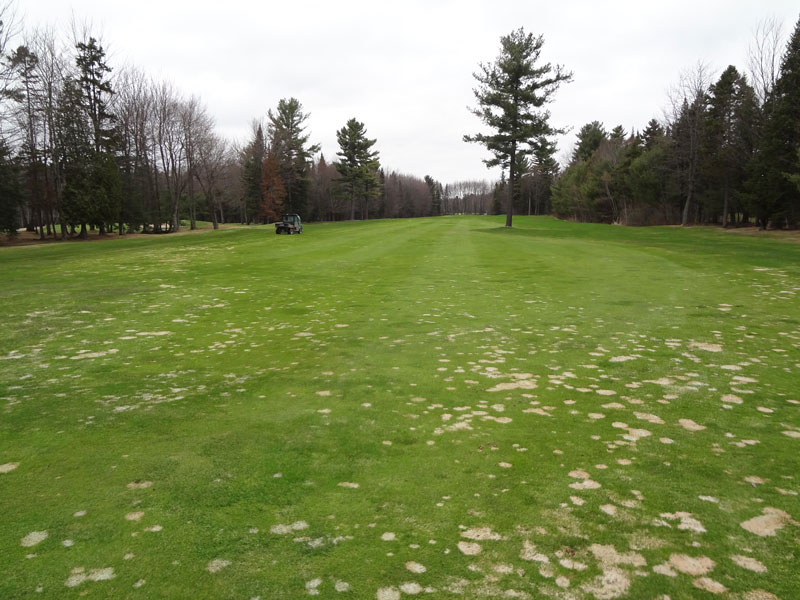
When circumstances like this arise, judgement calls are important. Depending on your level of tolerance for disease as well as the length of the growing season in your locale, you may want to add some insurance to your program by applying a fungicide to high value turf areas like greens and tees. Experience has shown that even a simple application of a contact fungicide like chlorothalonil can go a long way at “resetting” the pathogen population and offering extended protection into the late winter. Other options include broad-spectrum fungicides like DMIs, iprodione, the strobilurin fungicides or combinations therein that can offer a “booster” of protection against devastating outbreaks like the ones seen above.
Respect the Roots
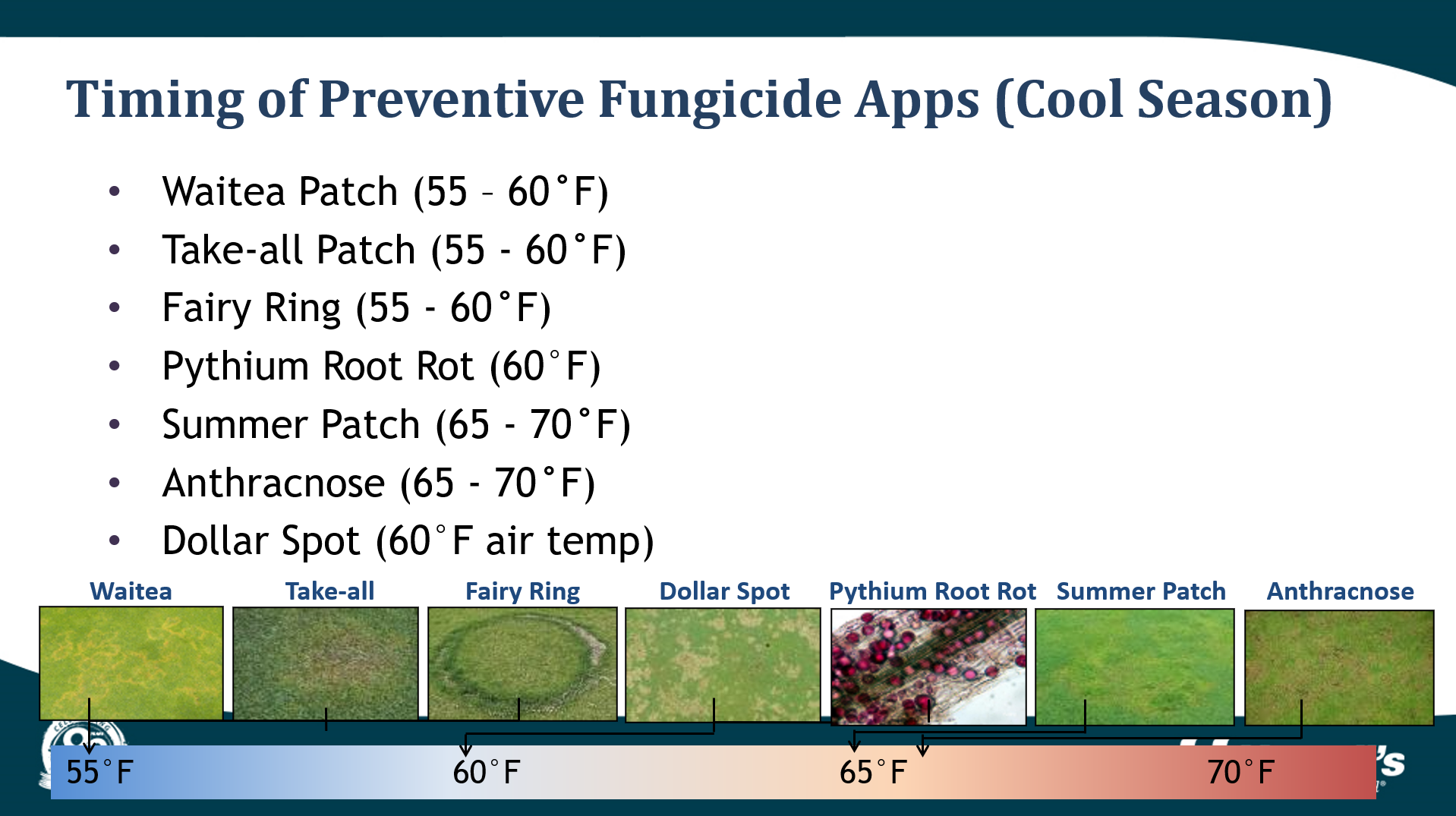
Everything starts to “wake up” as temperatures warm in the spring – including a majority of our soilborne pathogens. We treat most of these based on soil temperature models that have been established through decades of university and industry research. Bottom line, these key diseases tend to get started in the spring and our best chance at treating them and keeping their populations low are by getting an early jump on them with fungicides at this time.
For cool season turf, you should consider root zone targeted applications when soil temps are in the “sweet spot” of 55-65°F which favors the growth and development of many important turf pathogens. Product selection and specific targets will depend on your turf type and historical disease pressures, but it’s probably best to choose a broad-spectrum product like a DMI fungicide (tebuconazole, Maxtima, Densicor) or combination product (Briskway, Navicon, Fame + T) to cover all your bases in a single application. Pythium pathogens have been shown to start infecting turf root systems around this same time in the spring. Mixing in an application of a Pythium-specific fungicide can go a long way in areas that are prone to root rot or root dysfunction. Strategies like the “Banol First” program have proven highly beneficial at limiting early-season pythium issues and keeping inoculum low later into the season.
Whether you’re, putting the finishing touches on a new renovation, nursing sodded areas into a new year, or simply recovering from yet another long season of unrelenting traffic and record-setting rounds, early-season disease management is a critical component of starting the year on the right track. Be sure to reach out to your Harrell’s representative to get the latest info on agronomic solutions - And remember, an ounce of prevention is worth a pound of cure!
Related Resources

In addition to being the nation’s largest distributor of branded fungicides, herbicides, and insecticides, Harrell’s produces custom-blended fertilizers, specialty liquids, and wetting agents. Additionally, Harrell’s is the exclusive US owner, formulator, and distributor of all POLYON® branded products.
TEAM HARRELL'S
STAY EQUIPPED
Never stop learning. Access FREE continuing education courses from Harrell’s.
LET'S GROW
PRESS RELEASES
PRESS RELEASES
STAY EQUIPPED
Never stop learning. Access FREE continuing education courses from Harrell’s.
LET'S GROW