

Alkalinity Revisited
10/6/2020 - By Lynn Griffith
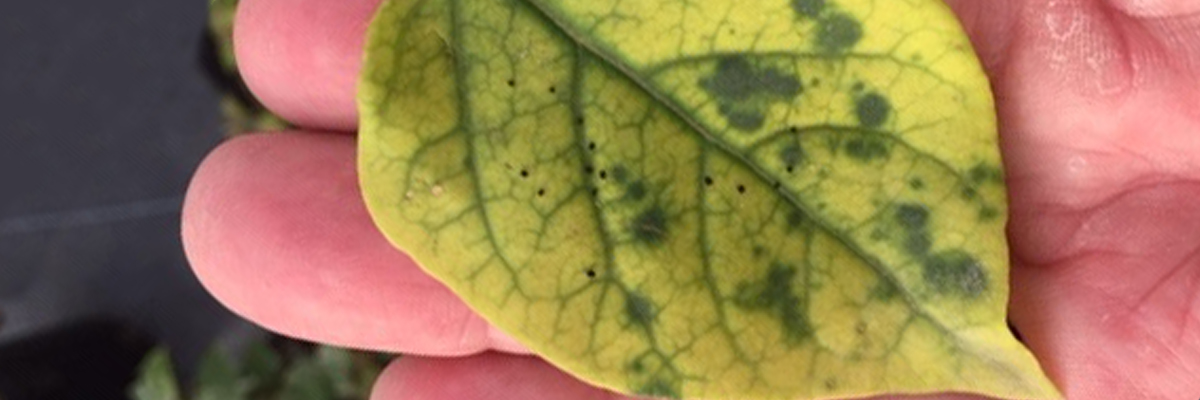
Alkalinity in irrigation water it is a topic often discussed but rarely well understood. Alkalinity is essentially the sum of bicarbonates, carbonates, and hydroxyl ions in the irrigation water, and unfortunately, it can cause several problems. However, once you understand what causes the alkalinity in your water, you’ll be better equipped to address the issue with corrective measures, like acid injection.
So, what causes the alkalinity? Well, in some parts of the world, we have limestone aquifers underground. Limestone is primarily made up of calcium carbonate, and as the water moves underground to our wellheads or irrigation ponds, it passes through this limestone. As the water passes through, some of the limestone gets dissolved in the groundwater. And when the calcium carbonate contained within the limestone is dissolved in water at room temperature, about 80% of it dissociates. Stated more simply, the calcium and carbonate separate from each other and are surrounded by water molecules. The CO3- carbonate ion binds with a hydrogen ion to form bicarbonate, which is HCO3-. This, by definition, makes the water pH go up.
This resulting alkalinity can be troublesome for a variety of reasons.
- Bicarbonate ions are directly toxic to plant roots.
- Bicarbonates affect iron and manganese availability, leading to potential deficiencies.
- When alkaline water dries on leaf surfaces, the calcium and bicarbonate ions bind back up to form calcium carbonate, which can lead to white stains on foliage. Also, if there’s more than 0.7 ppm iron in the water, rust stains can develop on the foliage.
Water high in alkalinity can also remove calcium from the soil. This can be a problem not only in nursery potting media but also in the manufactured soil in USGA golf greens as well. Alkaline water can also cause media pH to rise to unacceptable levels, especially in low-fertility situations. This can cause significant nutrient problems, especially with acid-loving plants such as azaleas, camellias, loropetalums, and willow oaks.
One way to deal with alkalinity is with acid injection. As you start to drip small amounts of acid into alkaline water, the acid reacts with the bicarbonates, which release out of the water as carbon dioxide. Generally, the carbonate ion doesn’t exist in waters with a pH below 8.3. Therefore, most of the alkalinity is in the form of bicarbonates. Harrell’s has several excellent acid injection products, like Neutralizer and Salt Rx available for golf course, sports turf, and nursery use.
As you begin to add a little acid to alkaline water, the pH will not move much at first. That’s because the acid is neutralizing the bicarbonates, which is reducing the alkalinity, but not necessarily the pH. High pH and alkalinity are not the same thing. As the acid begins neutralizing the bicarbonates into carbon dioxide gas, the buffer capacity of the water is reduced, thereby making it less alkaline and less resistant to pH lowering. Buffer capacity is the ability of the water to resist pH change, so once buffer capacity is reduced, then the pH starts to drop more rapidly as acid is added.
It may sound weird, but you could have 10 different examples of irrigation water all with a pH of 8.0, but they will all require different amounts of acid to get to a pH of say, 6.0. That’s because different water has different amounts of bicarbonates that need to be neutralized before the pH of the water can begin to drop.
So, if you’re struggling with alkalinity and pH issues in your irrigation water, you might want to consider acid injection as a way to reduce the bicarbonates in your water and ultimately lower your overall pH. Give your Harrell’s rep a call today to learn more about the different solutions and which ones might work best for your situation.
Related Resources

In addition to being the nation’s largest distributor of branded fungicides, herbicides, and insecticides, Harrell’s produces custom-blended fertilizers, specialty liquids, and wetting agents. Additionally, Harrell’s is the exclusive US owner, formulator, and distributor of all POLYON® branded products.
TEAM HARRELL'S
STAY EQUIPPED
Never stop learning. Access FREE continuing education courses from Harrell’s.
LET'S GROW
PRESS RELEASES
PRESS RELEASES
STAY EQUIPPED
Never stop learning. Access FREE continuing education courses from Harrell’s.
LET'S GROW