

Abiotic Turfgrass Pressures, or the "Death by a Thousand Cuts"
2/27/2023 - By Dr. Paul Giordano
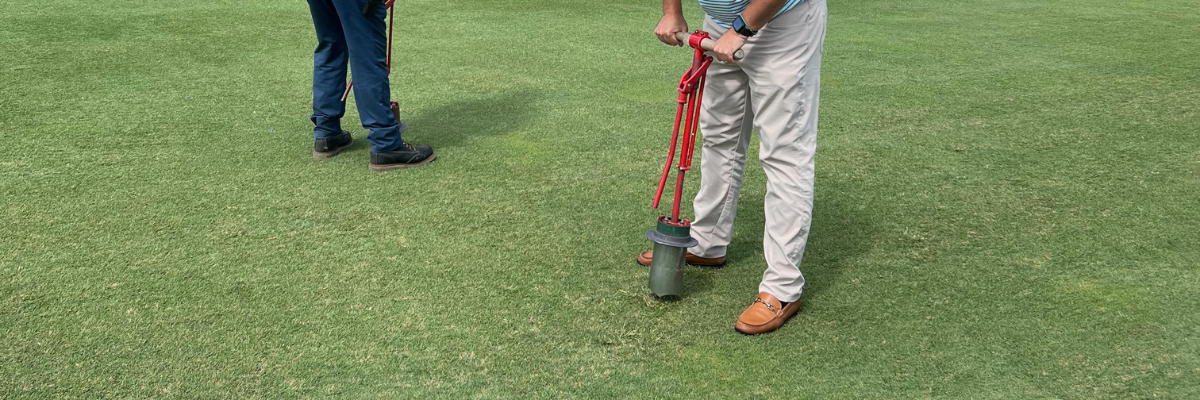
Grass dies. It’s inevitable. Every year without fail some of
our turfgrass areas will succumb to the various pressures of Mother Nature.
Often, we look for concrete answers and want to point the finger at one guilty culprit
like a movie murder mystery. But the reality is, grass dies – especially on highly maintained
areas like putting greens, tees, or fairways. However,
it’s more complicated than a single factor, which is where the phrase “death by
a thousand cuts” really comes into play.
Diagnosing the Problem
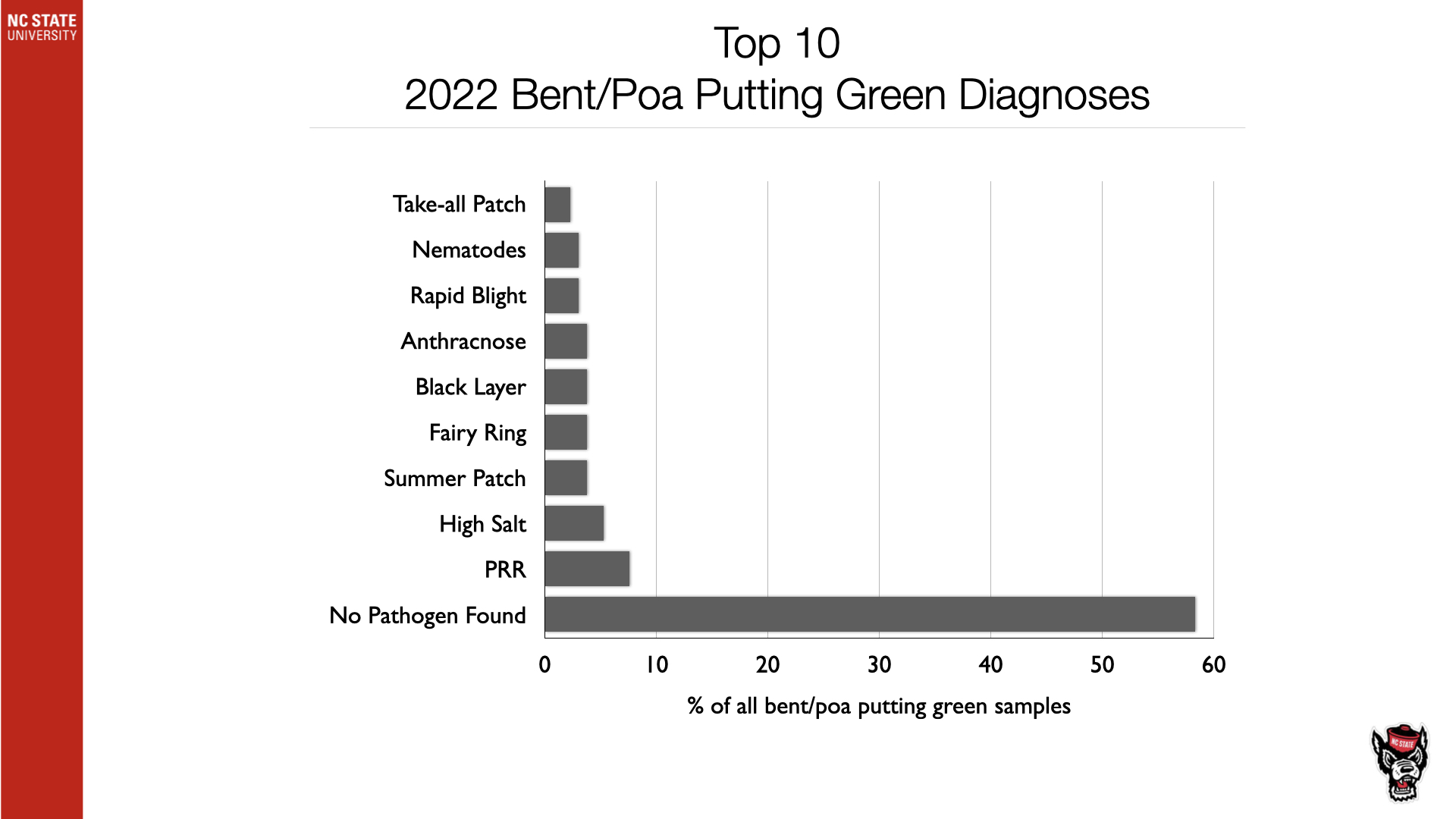
Dr. Jim Kerns and Lee Butler have one of the most active and
respected turfgrass diagnostic laboratories in the country. Each winter, they
put out an annual
review discussing the collective results of their sample submissions and
diagnostic analyses. One of the biggest takeaways from this report is that
regardless of the turf type and where the sample comes from, most of them end
up with “no pathogen found.” Put another way, the dead/dying samples submitted
for disease diagnosis are not primarily affected by a pathogen at all – they
are suffering from an abiotic issue.
Pest Thresholds
So, what does this mean? To me, it means there’s always more
to the story. I often think about pest “thresholds” and their relationship to
turf health or survivability. Things like nematodes
or the annual
bluegrass weevil are often given population threshold ranges that
are associated with turfgrass death or decline.
Overall Health or Condition of the Plant(s) in the Presence of Pests
This obviously matters –a healthy, high functioning plant
with a robust root system will be much more capable of weathering some minor
feeding or low levels of root infection verses a weak, shallow rooted plant. One
good example - Every summer I get to visit dozens of golf courses and I often take
small turf samples out of areas of concern for a better look under the
microscope. If you observe
Poa annua or creeping bentgrass roots closely during the summer months.
Invariably, you will find some level of ectotrophic runner hyphae hanging around
and inside these root systems.
These hyphae are associated with the fungal pathogens that
cause summer patch and take-all patch. But how much is too much? At what point
would we consider these to be a “primary” cause of turf decline? Well, that is where
the bigger picture and a well-trained diagnostic eye is needed.
Plant Strength is Important, and so is Looking Ahead
Point being, A healthy, well rooted turfgrass plant can
likely withstand a good amount of this type of infection and show no above ground
symptoms of decline. Conversely, a stand of annual bluegrass with roots only 1.5
– 2 inches deep will likely show signs of wilt or even death, with only a minor
compromise by the summer patch pathogen. Throw in other compounding factors
such as Pythium diseases, nematodes, traffic, shade, drought…etc. and
the weaker plants don’t stand a chance.
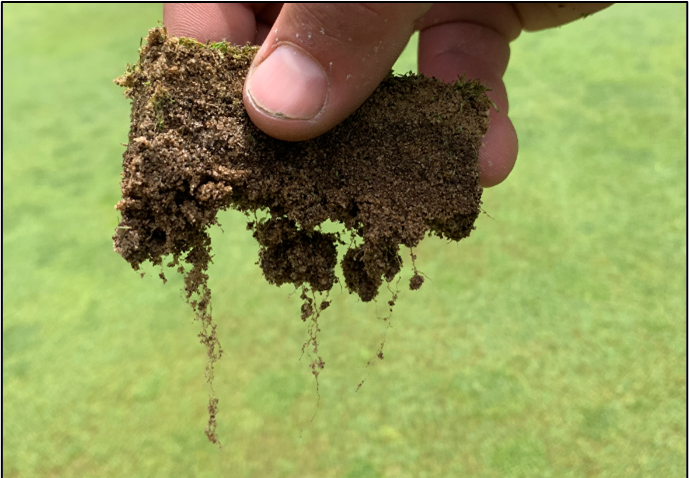
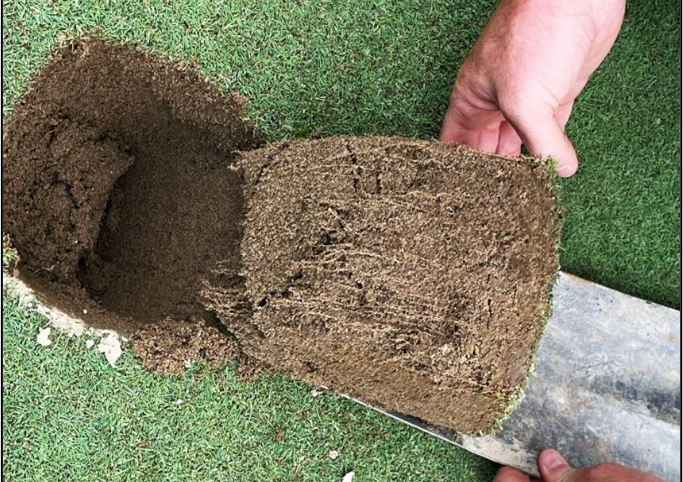
One of these root systems can tolerate much more disease, nematode, insect, and abiotic pressure than the other.
Spring is a great time to start thinking ahead. Most turf
managers are already incorporating preventive measures for destructive diseases
and insects like summer patch, fairy ring, ABW, and nematodes. We make applications
that are specifically timed and targeted to protect above and below ground
tissues from these pests. At the same time, we can help improve the efficacy of
our
fungicides/insecticides, encourage resilient growth and healthy development
of new roots.
A Few Product Recommendations
Several products have been proven to aid in naturally
stimulating root function, photosynthetic efficiency, and overall growth. Bio
stimulants like Amino Pro
V, EarthMax,
BioMax
4-0-0, Seaweed
A+E, and Mycorrhizae
Pro are excellent tools to incorporate into soil-targeted applications. These
scientifically proven products are included into
the Harrell’s Balanced approach programs aimed at root growth and the promotion
of turf health. Controlling the pests are the tip of the pyramid. The base or
foundation to which a healthy stand is built comes from
within the plant.
Controlling destructive diseases and insects is a necessary
step in achieving “plant health” - but it’s only the tip of pyramid. The base or
the foundation that plant health is built on includes:
·
Balanced nutrition
·
Stress mitigation
·
Photosynthetic efficiency
·
And optimizing root growth and function from the
inside out
To learn more on how the Harrell’s
Balanced Approach and full line of plant health offerings can help you,
reach out to your Harrell’s Territory Representative.
Resources
·
https://www.youtube.com/watch?v=mi-Vu8G_3ws
·
https://www.youtube.com/watch?v=gFFcKjvOTMk&t=55s
·
https://www.youtube.com/watch?v=yzQ-gHvXaHQ&t=20s
·
https://www.youtube.com/watch?v=aXo6aI5uWdA&t=46s
·
https://www.youtube.com/watch?v=aNlAyYva6FM
Related Resources

In addition to being the nation’s largest distributor of branded fungicides, herbicides, and insecticides, Harrell’s produces custom-blended fertilizers, specialty liquids, and wetting agents. Additionally, Harrell’s is the exclusive US owner, formulator, and distributor of all POLYON® branded products.
TEAM HARRELL'S
STAY EQUIPPED
Never stop learning. Access FREE continuing education courses from Harrell’s.
LET'S GROW
PRESS RELEASES
PRESS RELEASES
STAY EQUIPPED
Never stop learning. Access FREE continuing education courses from Harrell’s.
LET'S GROW