

5 Tips for Soil Testing - Know Your Soil
8/29/2024 - By Dr. Jeff Atkinson

Liebig’s Law of the Minimum states that plant growth is limited
by the most deficient nutrient, even if there is enough of all other nutrients
to support healthy turf growth. Liebig’s Law is based on the fact that
individual elements serve specific roles in plant biological function, and
often cannot be substituted for an alternative element. In turf management we
put a lot of consideration into nitrogen fertility; however, if another
essential nutrient is deficient turf growth will be limited, no matter how much
nitrogen is applied.
Sure, generalizations can be made about nutrient availability
in a region but the only way to be sure that the right nutrition is being
applied is to soil test. Here are five considerations to get the most out of
soil testing this season:
1.
Begin Soil Testing with Interpretation in Mind
All soil tests are not equal, and misinterpretation of
results can lead to the application of the wrong nutrients or applying
unnecessary fertilizer inputs. For example, a Saturated Paste Extract test does
not provide information related to the amount of nutrition held in soil
reserves, a Mehlich III extract test is more appropriate for this use. Alternatively,
a Saturated Paste Extract test is more informative for soil salinity
considerations and soil anion levels, such as boron.
Beyond the type of test, how you go about interpreting soil
test results is as important as the test itself. Four interpretation strategies
are common: 1. Following the soil testing lab’s recommendations; 2. Comparing
results to the Sufficiency Level of Sustainable Nutrition threshold guidelines;
3. Comparing results to the Minimum Level of Sustainable Nutrition (MLSN)
threshold guidelines; and 4. Balancing soil nutrient levels.
All approaches have advantages and disadvantages, and all
have been used to produce high-quality turf. The MLSN approach is a relatively
new approach that was developed specifically for turfgrass management by
evaluating the nutrient levels of thousands of soil samples taken from high-performing
turfgrass areas. The MLSN approach balances supplying adequate nutrition to
prevent conflict with
Liebig’s Law of the Minimum while avoiding excessive, unneeded fertilizer
inputs. Here are a set of informative resources to learn more about each
interpretation approach:
-
Clarifying Soil Testing
I: Saturated paste and dilute extracts - GCM
-
Clarifying Soil Testing
II: Choosing SLAN extractants for macronutrients - GCM
-
Clarifying
Soil Testing III: SLAN sufficiency ranges and recommendations - GCM
-
Minimum
Levels for Sustainable Nutrition Soil Guidelines - Pace Turf

2.
Pay Attention to Soil Testing Nutrient Extraction
Solutions
The solution chosen by soil testing labs to extract
nutrients from a soil sample will significantly influence results. For example,
let us consider two hypothetical extraction solutions used to test for
phosphorus in a high pH, calcareous soil: Solution A and Solution B. Solution A
may indicate the soil phosphorus concentration is 20 lbs/A, while extraction from
Solution B may indicate the phosphorus concentration to be 50 lbs/A. If
everything else is equal, there is a clear difference in the ability of the two
extraction solutions to remove phosphorus from calcareous soils, but which one
more accurately represents a plant’s ability to access the phosphorus?
There is a lot of information available on the nuances of
extraction solutions and which ones are most appropriate for various
conditions. Mehlich III is commonly the default extraction solution for many
soil testing labs and is considered the most universal extraction solution. In
other words, Mehlich III provides consistent results in terms of plant
availability across the widest range of soil and environmental conditions.
Further, interpretation methods are calibrated for use with
specific extraction solutions, like how the MLSN threshold approach is
calibrated for use with the Mehlich III extraction solution. Using data
generated by alternative extraction solutions may lead to the generation of
incorrect conclusions if the data is compared to the MLSN threshold values.
Unfortunately, various soil testing labs do not indicate the
default extraction solution they use to conduct soil tests. In many cases, you
can request a specific extraction solution on the soil test submission
worksheet. More information relating to extraction solutions and appropriate
tests for specific nutrients in specific soil types is outlined in the
reference below:
-
Clarifying Soil Testing
II: Choosing SLAN extractants for macronutrients - GCM
3.
Avoid Combining Soil Testing Samples
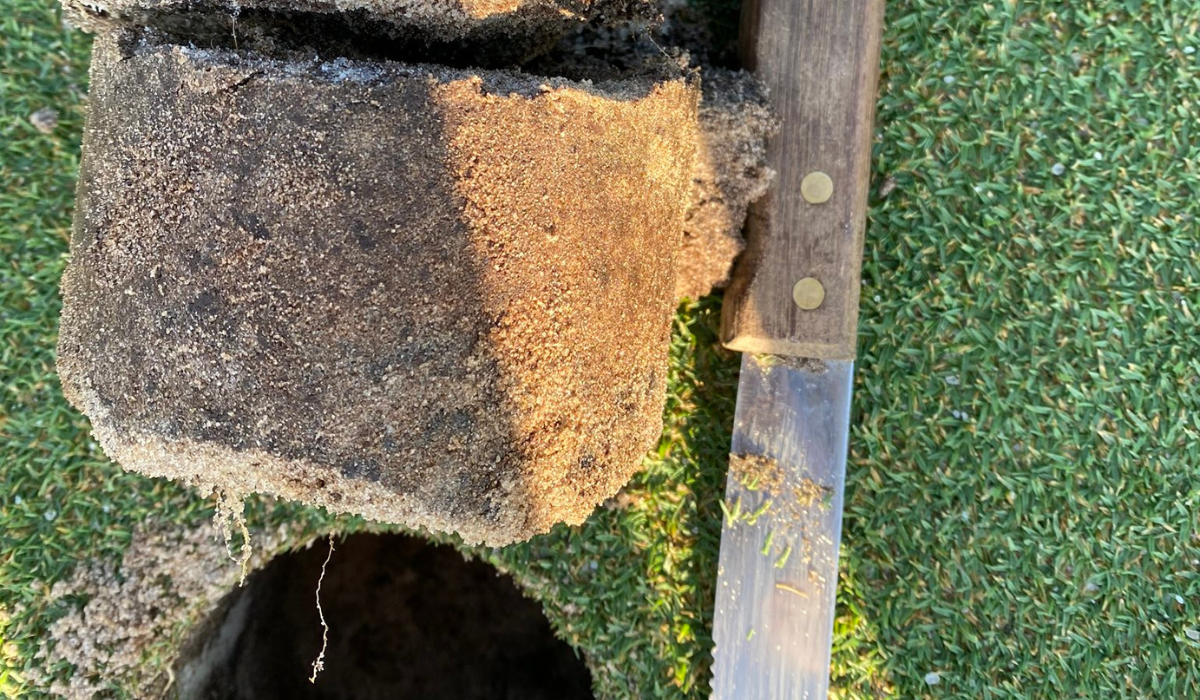
Soil is highly variable, and samples from different areas of
a property can have drastically distinct characteristics. For example, if a set
of fairways on a property is very sandy and the rest are heavy clay, do not
combine a sample from sandy fairways with a sample from heavier soils. Whenever
possible, take and submit samples from areas with comparable properties. A
realistic example of this concept is to submit separate samples for USGA greens
and push-up greens that may be present on the same property.
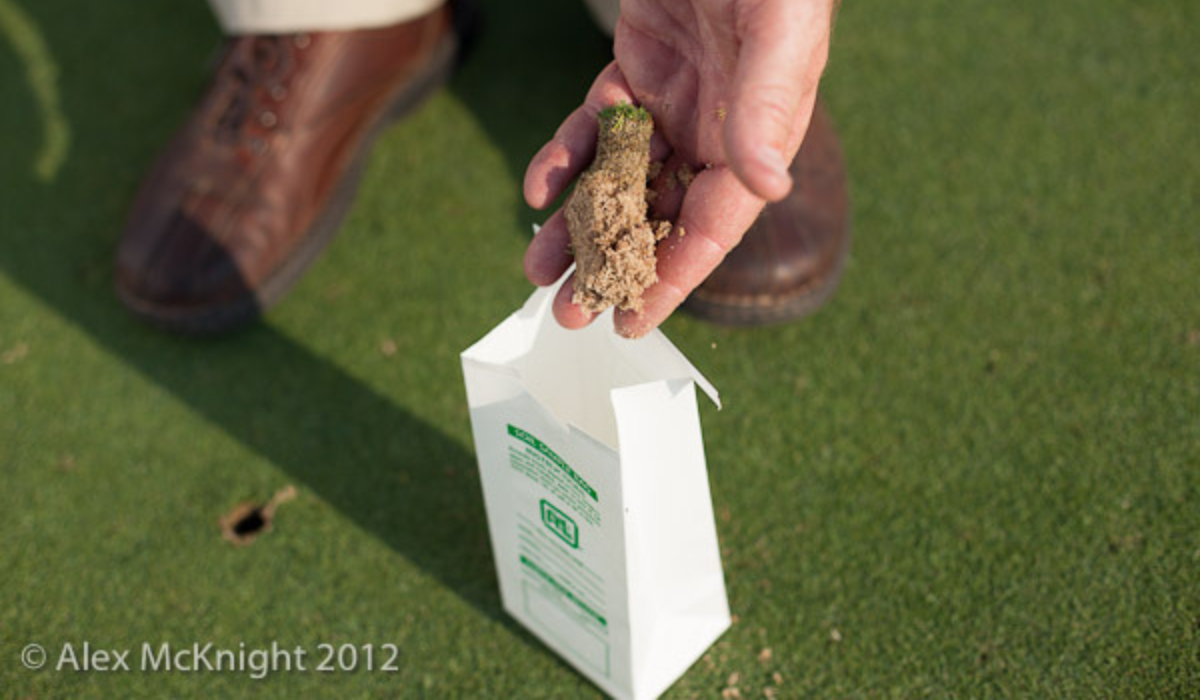
More information on how to properly take a soil sample can
be found in the video linked below, starring Harrell’s very own Dr. Raymond
Snyder:
https://www.youtube.com/watch?v=U-nCCxjomlE
4.
Stay Consistent with Soil Testing
An experimental design fundamental of scientific experiments
is to limit the number of variables in the experiment that can affect the
result. Soil testing is a scientific experiment in which an excessive number of
experimental variables can lead to inconclusive results. Three common variables
that can be eliminated, or significantly controlled for include timing of soil
sampling, areas sampled, and the soil testing lab which is used to process the
results.
Soil nutrient levels naturally flux through the year. To
prevent confusion and minimize seasonal variability, take soil samples at
approximately the same time each year. This approach will help to reduce seasonal
effects on soil test results.
Soil Variability
Soils are inherently variable, even on a local scale. Often
a soil test is sampled from one area one year then a completely different area
another year. In this scenario, it is difficult to determine if differences
between tests are due to location or due to timing. Alternatively, samples from
similar areas year after year eliminate the location variable while allowing
conclusions to be drawn about the effects of an ongoing fertility program.
Consistency is also important when it comes to the soil
testing lab. The table below outlines soil test results received from four
separate soil testing facilities, all for the same homogenized soil sample. Notice
the general trends are similar, but specific concentration values vary.
Variability in results between labs can be attributed to
several factors, including differences in technique or nutrient extraction
solution. Sending samples to a certain lab in year one, and then a different
lab in year two can result in confusing conclusions, which are not actionable.
Talk to your neighboring colleagues to find a lab they trust, then pick a lab
and stick with them.
Table 1.
Soil test results from four independent soil testing labs of the same homogenized
soil sample.
|
Lab #1 |
Lab #2 |
Lab #3 |
Lab #4 |
|
|
pH |
8.1 |
7.9 |
7.5 |
7.7 |
|
Organic Matter % |
0.9 |
0.85 |
1.20 |
1.20 |
|
CEC |
8.9 |
44.56 |
51.67 |
16.3 |
|
P lb/a |
54 |
42 |
77 |
40 |
|
K lb/a |
12 |
40 |
24 |
50 |
|
Mg lb/a |
80 |
262 |
265 |
338 |
|
Ca lb/a |
3,416 |
16,710 |
19,380 |
24,360 |
|
Na lb/a |
24 |
40 |
30 |
5.
Soil Testing Shows How Your Fertilizer Program
Changes
Annual soil testing is an excellent way to understand the
effects of a fertility program on soil nutrient reserves. Let’s say a 2024 soil
test indicates the soil is low in magnesium, incorporating a magnesium source
into a Harrell's POLYON® controlled-release fertilzer blend in 2024 would be a smart way to address the magnesium
deficiency. Looking forward to the future in this same case, a 2025 soil test
of the same area indicates magnesium levels are adequate to sustain healthy
turf growth through the 2025 season and a supplemental magnesium application is
not needed.
In response, another deficiency could be addressed instead,
or nitrogen feeding could be the sole focus of the 2025 granular fertility
program. Regular soil testing provides a mechanism for fertilizer programs to
be objectively adjusted on an as-needed basis to provide adequate nutrition
while limiting excessive nutrient inputs and associated costs.
Continue the Soil Testing Conversation
Although these 5 tips are major considerations to keep in mind for your next soil test, there is certainly more to discuss when it comes to incorporating an actionable soil testing program into your agronomic program. We welcome the opportunity to have that conversation with you, so don’t hesitate to reach out to your local Harrell's Rep for more information.
Related Resources

In addition to being the nation’s largest distributor of branded fungicides, herbicides, and insecticides, Harrell’s produces custom-blended fertilizers, specialty liquids, and wetting agents. Additionally, Harrell’s is the exclusive US owner, formulator, and distributor of all POLYON® branded products.
TEAM HARRELL'S
STAY EQUIPPED
Never stop learning. Access FREE continuing education courses from Harrell’s.
LET'S GROW
PRESS RELEASES
PRESS RELEASES
STAY EQUIPPED
Never stop learning. Access FREE continuing education courses from Harrell’s.
LET'S GROW