

5 Tips for Evaluating a Field Crop Issue
12/22/2020 - By Dr. Tom Reed
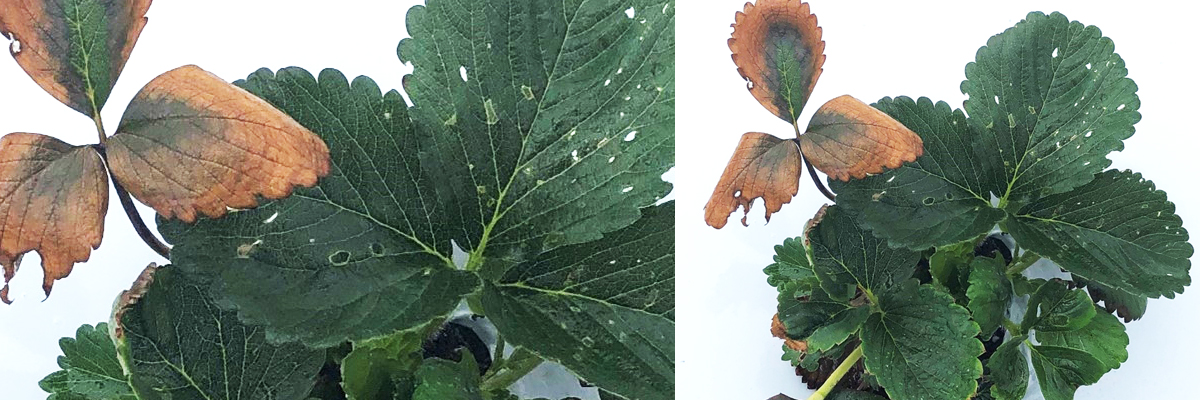
Field crop problems from abiotic and biotic factors often lead to pressing and complex questions with economic consequences for producers. When evaluating an issue in the field, your experience and understanding of the current local crop season can be instrumental. However, you should approach each situation with an open mind, seek out all the information, and document the facts before proceeding with a diagnosis or corrective measures. A systematic approach can help prevent bias and ensure you don’t overlook factors that may be contributing to the issue.
1. Be Prepared:
- Have an open mind to all possibilities. Think of the big picture as well as considering all the specific details.
- Have materials and tools—including those for sampling—to document the issue.
- Know the characteristics of a normal, healthy crop. You may need to compare the affected field to a normal crop variety at the same stage in order to recognize any resistant or susceptible attributes.
2. Collect Field Agronomic Information—document all important dates and events related to the crop and the issue, to include:
- Planting
- Applications
- Weather conditions
- Drainage
- Topography
- Soil characteristics
- Previous sample analyses (soil, tissue, petiole)
- Field management
- Historical field use
3. Assess the Site:
- When did the problem appear?
- Is it in an isolated area, or is it widespread?
- Is it in a pattern, or is it scattered? Uniform distribution usually suggests an abiotic problem.
- Was the onset sudden or gradual?
- What’s the severity of the damage?
- What are the conditions of affected area (wet, dry, soil, etc.)?
4. Assess the Plant:
- Identify and inspect parts of the plant that are affected (new growth, old growth, whole plant, specific side, leaves, stem, flowers, fruit, roots, etc.).
- Observe and document symptoms or pest presence (wilting, chlorosis, stunting, etc.).
5. Take Samples:
- If a pest or nutrient issue is suspected, take samples, and send them to an appropriate lab for analyses.
- If suitable, take a sample from a comparative healthy plant as well.
Related Resources

In addition to being the nation’s largest distributor of branded fungicides, herbicides, and insecticides, Harrell’s produces custom-blended fertilizers, specialty liquids, and wetting agents. Additionally, Harrell’s is the exclusive US owner, formulator, and distributor of all POLYON® branded products.
TEAM HARRELL'S
STAY EQUIPPED
Never stop learning. Access FREE continuing education courses from Harrell’s.
LET'S GROW
PRESS RELEASES
PRESS RELEASES
STAY EQUIPPED
Never stop learning. Access FREE continuing education courses from Harrell’s.
LET'S GROW