

5 Tips for Effective Sparged Fertilizer Preemergence Programs
3/30/2023 - By Dr. Jeff Atkinson
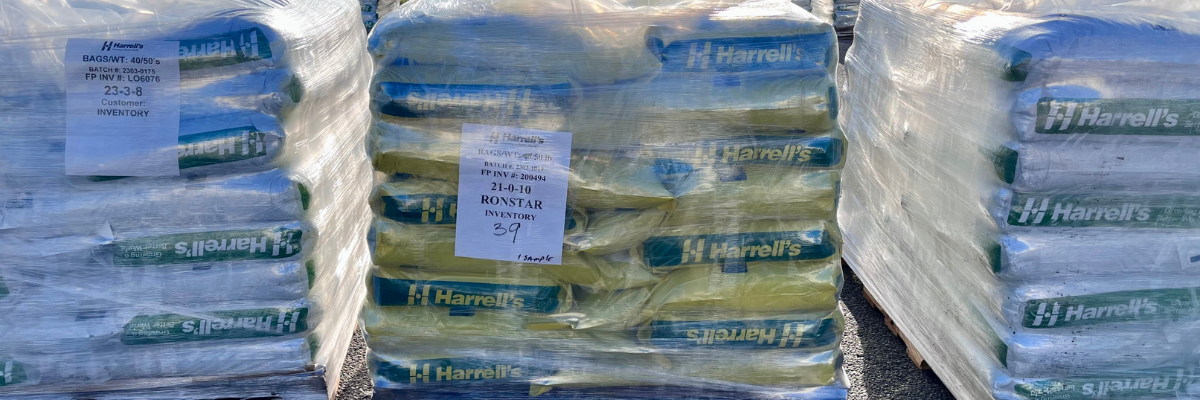
Each year, conversations kick up around fertility and preemergence herbicide programs. Sparging preemergence herbicides on a fertilizer carrier is an efficient way to complete two agronomically important tasks at once. However, pesticide sparging is not as simple as putting herbicide and fertilizer together in a mixer.
Is "Sparging" a new term to you? Find out what sparging is here.
Here are 5 tips to maximize the effectiveness of fertilizer
as a preemergence herbicide delivery system:
Apply Sparged Fertilizer at an Appropriate Spread Rate
An argument for spraying preemergence herbicides is the
superior coverage spray applications provide. While this may be true in a
technical sense, applying preemergence herbicides using an appropriate amount
of granular carrier per area is proven to provide equal weed control to spray
applications. On a small scale, each fertilizer granule sparged with a preemergence
herbicide can be thought of as having a ‘zone of influence.’
If a blend is applied at too low a rate, these zones will
not overlap, allowing for weed seed germination and establishment in the voids
(Figure
1).
Alternatively, when a granular blend is applied at an adequate rate, the zones
overlap and provide full coverage of the treated area (Figure 2).
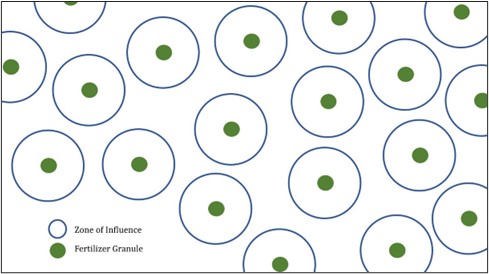
Figure 1. Sparged fertilizer granules applied
at a low spread rate will not have overlapping 'zones of influence,' resulting
in poor weed control.
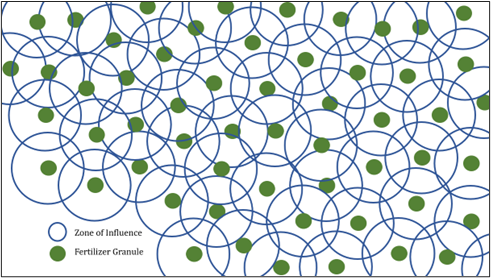
Figure 2. Sparged fertilizer granules applied
at an adequate spread rate will overlap 'zones of influence', resulting in
excellent weed control.
Select the Appropriate Active Ingredient for Sparging
All active ingredients sparged on fertilizer by Harrell’s
are effective; however, they are not all effective for all purposes. Understanding
which active ingredient to apply for which weeds and at what time is as
important as applying any herbicide at all. When selecting which active
ingredient to sparge on fertilizer the target weed species, the timing of the year,
desired longevity, and mode of action rotation should all be considered. If you
need any assistance with this or a diagnosis, your Harrell’s Rep is here for you.
Utilize a Quality Sparging Substrate
Better blends result from quality raw materials. In a
perfect world, all raw materials would be spherical, and consistent in size, and
consistent in density. However (and unfortunately), we don’t live in a perfect
world. The reality is that some materials are round (urea), some materials are
angular (muriate of potash), some materials have a range of sizing variability
(filler), and others are very consistent (POLYON®
fertilizer). When formulating a sparged blend, selecting materials that are
similar in size, consistency, and density will result in better distribution
uniformity of the active ingredient during application.
Align Fertility with Herbicide Longevity to Maximize Sparged Fertilizer
Turf 101 teaches that a dense turf stand is the best defense against weeds. The fact is many weed seeds require light to germinate. A
dense turf canopy prevents light from infiltrating the soil surface, thus
preventing weed seed germination. Applying a long-term nitrogen product to
promote turf density, that aligns with the longevity of a preemergence
herbicide application, is a multi-pronged approach to weed management. The
predictability and consistency of POLYON® fertilizer allow for the matching of
active ingredients to feeding longevity to create a holistic weed management
program.
The example in Figure 3
assumes a longevity of 12 weeks for a preemergence herbicide applied on May 1st.
As can be seen in the product longevity section, this matches perfectly with
fertility longevity. In this scenario, a second preemergence and fertility
application will be required to provide full-season weed control and turf-feeding
coverage.
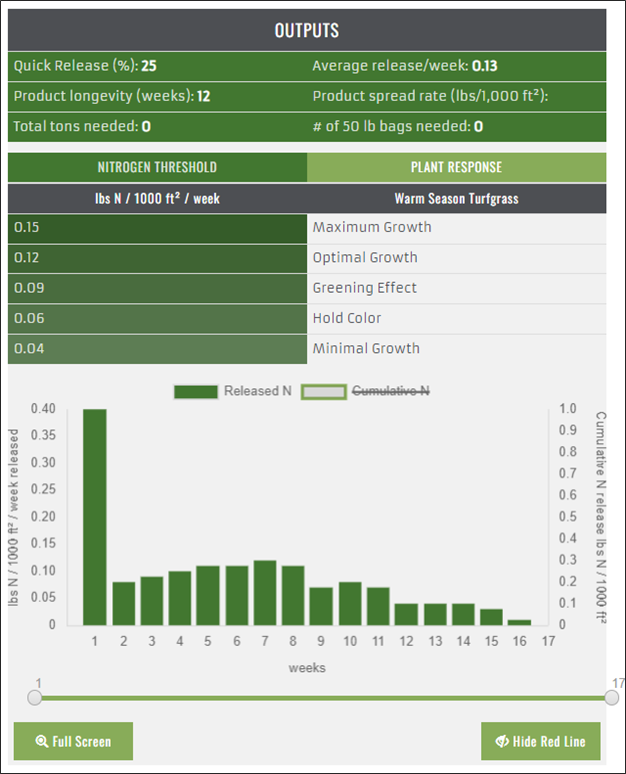
Figure 3. POLYON® fertilizer programs can be
formulated to match feeding longevity with preemergence herbicide efficacy.
Select Products Manufactured with Superior Formulation Techniques
Quality of formulation can make or break a sparged
fertilizer blend and experience and technique are as important as the active
ingredient that is being sparged. Several of Harrell’s sparge ingredients are
applied using a ‘Hot Melt’ process which applies a liquified solution that
freezes on the fertilizer substrate during cooling.
The result is a product with consistent coverage and reduced
dust compared to alternative sparging techniques. This is especially important
for herbicides such as oxadiazon (Ronstar (Restricted Use Pesticide))
which can be phytotoxic if applied using a dusty formulation.
Creating quality sparged fertilizer blends is as much of an
art as it is a science, especially in a custom blending scenario. Harrell’s reps are equipped with the
knowledge and experience to create quality blends that result in excellent weed
control and fertility for any agronomic situation. If you have any other questions
on sparging or are interested in some of our blends, reach out to your local Harrell’s rep.
Related Resources

In addition to being the nation’s largest distributor of branded fungicides, herbicides, and insecticides, Harrell’s produces custom-blended fertilizers, specialty liquids, and wetting agents. Additionally, Harrell’s is the exclusive US owner, formulator, and distributor of all POLYON® branded products.
TEAM HARRELL'S
STAY EQUIPPED
Never stop learning. Access FREE continuing education courses from Harrell’s.
LET'S GROW
PRESS RELEASES
PRESS RELEASES
STAY EQUIPPED
Never stop learning. Access FREE continuing education courses from Harrell’s.
LET'S GROW