

Fertilizer Classification: Common Misunderstandings in a Poorly Defined Market
6/29/2023 - By Dr. Jeff Atkinson

Slow-release fertilizer is not necessarily controlled-release,
but controlled-release fertilizer is slow-release fertilizer. And enhanced-efficiency
fertilizer can be both slow-release, controlled-release, or neither. Confused
yet?
It is common knowledge that pesticides are regulated by the
Environmental Protection Agency (EPA). It is
less common knowledge that a similar federal regulatory body does not exist for
the fertilizer industry. Without a regulatory agency in place, claims made
about fertilizer technologies in the marketplace are often confusing,
misleading, or outright incorrect.
The Association of American Plant Food Control Officials (AAPFCO) was organized in 1946 to bring some sense to the madness. This group
is made up of fertilizer control officials from each state in the United
States, Canada, and Puerto Rico. Over time, they have worked to bring
consistency to fertilizer definitions amongst state regulatory agencies. This
way, both fertilizer consumers and retailers can market and consume fertilizer
goods with confidence that product claims are representative of the product.
In today’s market, confusion remains about the differences between
fertilizer technologies. Here is some clarification on three common points of
confusion:
Slow-Release Nitrogen is not Stabilized-Nitrogen
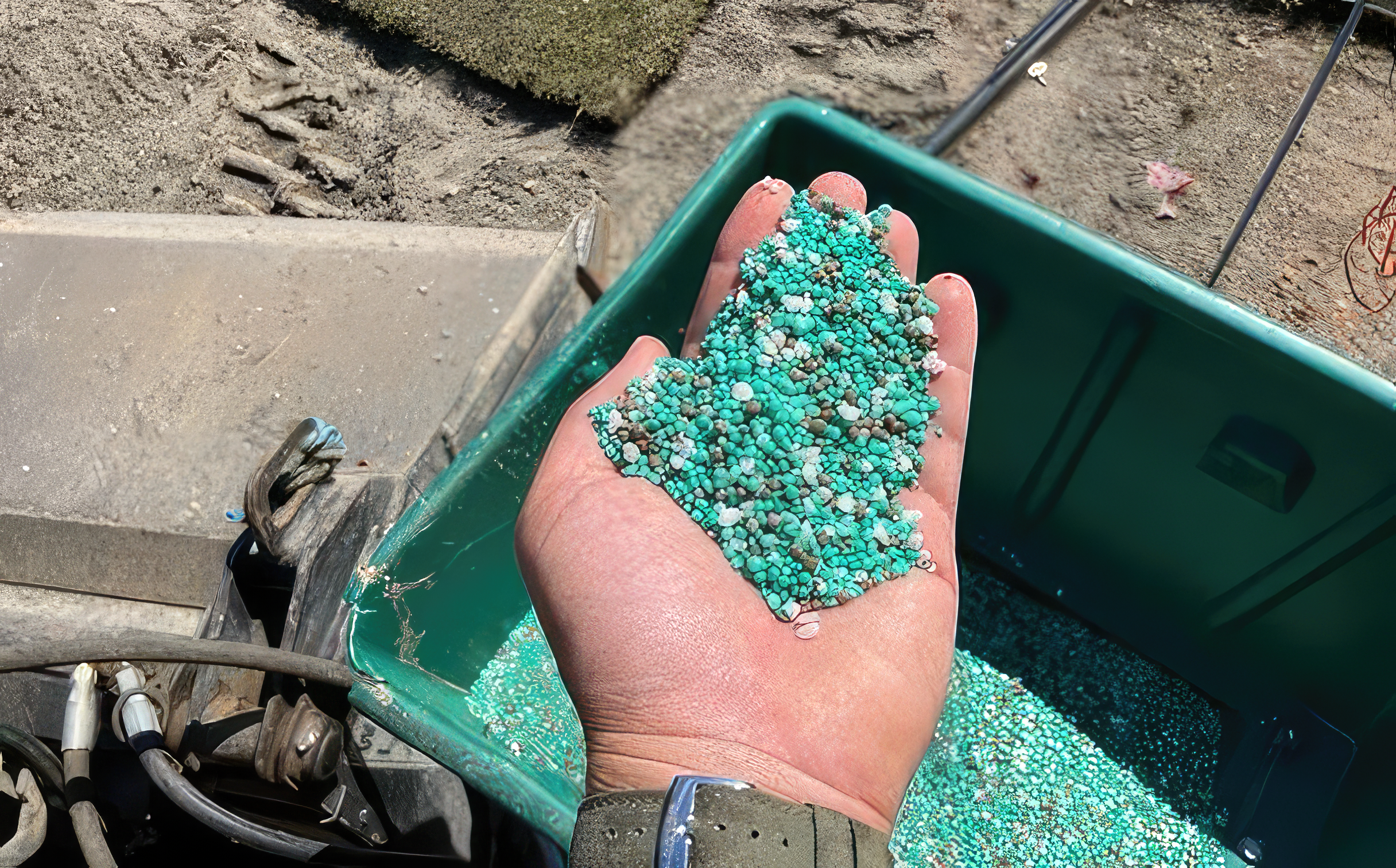
Stabilized nitrogen formulations contain additives that limit environmental losses through volatilization and leaching. Harrell'sMAX® N30 Plus with UMAXX® is an example of a stabilized nitrogen source. N30 plus is formulated with dicyandiamide (DCD) and N-(n-Butyl)-thiophosphoric triamide (NBPT). NBPT slows conversion of urea to ammonium-N, which under warm and wet conditions, can be volatilized as ammonia and lost to the atmosphere.
Once in the soil, ammonia volatilization is significantly reduced, making NBPT an excellent tool to reduce atmospheric losses of nitrogen between fertilizer application and irrigation or rainfall. This is significant under hot and warm conditions as nitrogen loss can be as much as 30%!
Although stabilized nitrogen sources do limit
environmental losses, they do not fit the definition of a slow-release or
controlled-release fertilizer.
They do, however, fit the bill of an Enhanced Efficiency
Fertilizer: “Fertilizer products with characteristics that allow increased
plant uptake and reduce nutrient losses to the environment when compared to an
appropriate reference product.” This is the confusing part. Slow-release fertilizers
and controlled-release fertilizers also fit the description of an enhanced-efficiency
fertilizer.
Once urea is incorporated into the soil and converted to ammonium, DCD takes over the heavy lifting. DCD slows the conversion of ammonium-N to nitrate-N. Since ammonium (NH4+) is a positively charged cation, it will hold onto negatively charged soil cation exchange sites. Once ammonium is converted to negatively charged nitrate (NO3-), it is no longer able to hold onto negatively charged cation exchange sites, making nitrate much more prone to leaching.
Slow-Release Fertilizer and Controlled Release Nitrogen
Slow-release nitrogen does not equal controlled-release
nitrogen.
AAPFCO
defines slow release as ‘fertilizers in a form that release, or convert to a
plant-available form, plant nutrients at a slower rate relative to an
appropriate reference soluble product.’
For example, a reference soluble product is urea. If a urea
granule is coated in sulfur, the urea will become plant available over time via
catastrophic failure of the sulfur coating at a slower rate.
Alternatively, if urea is reacted with formaldehyde (UF) it cannot be utilized by plants. The resulting linkage between urea and formaldehyde groups must be digested by soil microbes in order for urea to become available for conversion to a plant-available nitrogen form, ammonium, and nitrate. This process takes time and is influenced by soil temperature and soil microbial activity, which qualifies this technology as a slow-release fertilizer. Methylene urea (MU) is another common source that behaves similarly to UF.
A third common slow-release nitrogen source is organic
nitrogen formulations. In this case, ‘organic’ does not necessarily mean OMRI
or USDA certified. Rather, ‘organic’ suggests the fertilizer origin is from a source
such as biosolids, chicken manure, or feather meal. Like urea-formaldehyde, these
materials must be digested by soil microbes for the nitrogen to be converted to
an inorganic form (ammonium or nitrate) and become plant available. Like urea-formaldehyde,
the conversion of organic nitrogen to ammonium and nitrate depends on soil
microbial activity.
The dependence of these materials on soil microbial
activity to facilitate nitrogen release is why they are not considered
controlled-release fertilizers. Estimates on product longevity can be made.
However, week-to-week availability cannot be predicted.
Slow-Release Fertilizer vs. Controlled-Release Fertilizer vs. Stabilized
Nitrogen
Controlled-release nitrogen is different from slow-release
and stabilized nitrogen sources.
To further confuse, controlled-release fertilizer (CRF) is
also considered a slow-release and enhanced efficiency fertilizer.
The difference is that CRF is engineered to provide
nutrients over time at a predictable rate under specified conditions per the
AAPFCO definition. This exact definition describes a level of control and
longevity not achieved by either stabilized nitrogen or slow-release nitrogen
sources.
Further, CRF technology allows for the controlled release of
a range of nutrients, not just nitrogen. Nitrogen, phosphorus, potassium, homogenous
NPK, and homogenous NPK plus minors are all options available as POLYON® controlled-release fertilizers.
There are differences in the level of control achieved by different CRF technologies. Short of getting into a discussion of different CRF technologies, it’s important to point out that Harrell’s employs a team of individuals at our Sylacauga, Alabama fertilizer coating facility whose sole task is to develop and optimize POLYON® fertilizer consistency and predictability.

Applying a CRF coating is not as simple as applying a polymer coating to a fertilizer substrate. Environmental conditions, processing time, polymer selection, and fertilizer substrate qualification must all be considered if a quality CRF is to be manufactured. Harrell’s could cut corners to manufacture a cheaper product, but the POLYON® guarantee is one of consistency, predictability, and control, and that’s achieved by the dedication and work accomplished every day by Harrell’s Sylacauga R&D team.
Reach Out to Your Harrell’s Rep to Optimize Your Fertility Program
Next time you’re working to optimize a fertility program, reach out to your Harrell's Rep. They are an excellent resource for understanding when and why to use different fertility sources and how to maximize their impact.
Related Resources

In addition to being the nation’s largest distributor of branded fungicides, herbicides, and insecticides, Harrell’s produces custom-blended fertilizers, specialty liquids, and wetting agents. Additionally, Harrell’s is the exclusive US owner, formulator, and distributor of all POLYON® branded products.
TEAM HARRELL'S
STAY EQUIPPED
Never stop learning. Access FREE continuing education courses from Harrell’s.
LET'S GROW
PRESS RELEASES
PRESS RELEASES
STAY EQUIPPED
Never stop learning. Access FREE continuing education courses from Harrell’s.
LET'S GROW