

Cool Season Turfgrass Diseases - Identification & Management of Lawn Diseases
4/23/2024 - By Dr. Paul Giordano
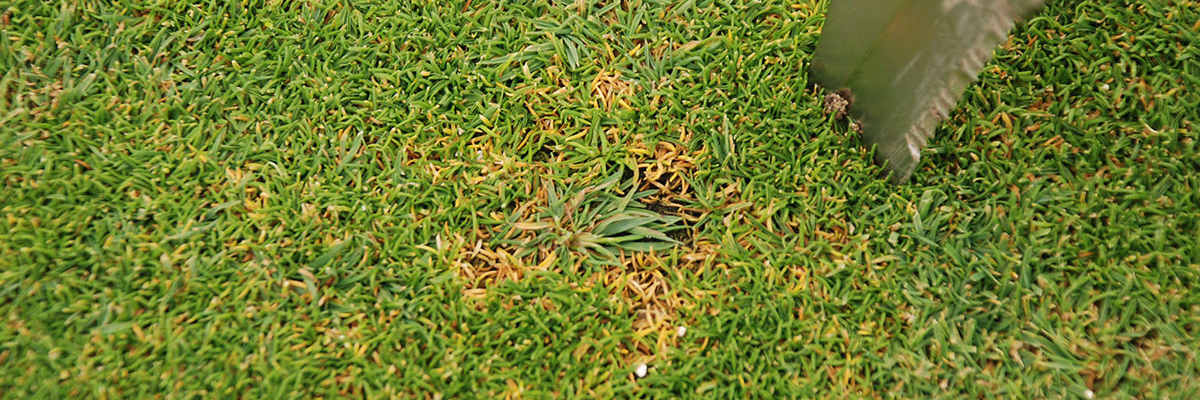
Turfgrass diseases can return with a vengeance during the
spring. There are many different turfgrass diseases you may encounter, and it
is important to understand how to identify and treat each one. Continue reading
for an overview of the most important turfgrass diseases you may see during the
spring.
Let’s start with Pythium Root Rot:
Turfgrass Disease - Anthracnose
A common, but sometimes misunderstood disease of Poa annua is Anthracnose. Caused by the fungus Colletotrichum cereale, anthracnose manifests as small, irregularly shaped yellow or copper-to-orange-colored areas of declining turf. Individual grass plants may have lesions that appear water-soaked with yellowing on the older leaves of the plant. Black, pepper-like fruiting structures known as acervuli may be visible upon close inspection of affected leaves. As the disease progresses, the affected spots will expand or coalesce, causing significant thinning of the turf stand. In warmer regions and under significant stress, anthracnose can cause disease on creeping bentgrass as well.
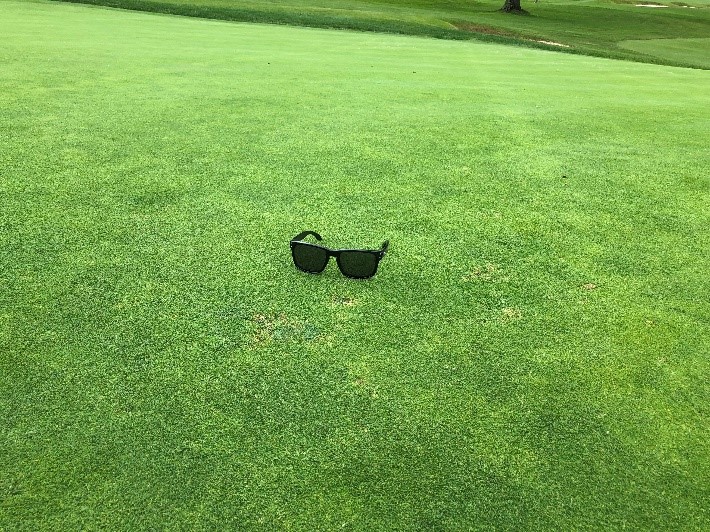
Management strategies typically involve cultural practices
such as judicious use of irrigation, raising mowing height, incorporation of
sand topdressing, use of plant health-promoting biostimulants, increasing
nitrogen fertility, and fungicide applications to mitigate the spread of the
disease and limit stress. The DMI class of chemistry can be highly effective on
managing anthracnose. Products like Harrell'sProtectMAX® Tebuconazole or Propiconazole have proven to control anthracnose when used in preventive
programs starting in the late spring. Combinations of Title Phyte® Systemic Fungicide and ProtectMAX® Chlorothalonil 6L are also highly effective.
Turfgrass Disease - Waitea
aka Brown Ring Patch
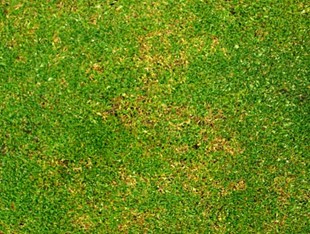
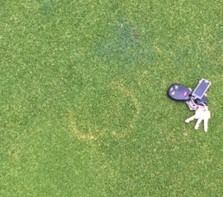
Waitea (Brown Ring) patch is caused by the Rhizoctonia
relative known as Waitea circinata. The disease is most common on Poa annua
putting greens in the mid-late spring when air temperatures are between 55-85°
F and soil temperatures are below 65° F. It’s often confused with a very
similar disease known as yellow patch, which is also caused by a Rhizoctonia
pathogen - but yellow patch tends to occur in cooler weather conditions of the
early spring. Initial symptoms on annual bluegrass are bright yellow rings that
range from a couple inches to over a foot in diameter, potentially turning a
brownish yellow and coalescing into a scalloped or honeycomb pattern. Waitea
patch can sometimes form a visible white mycellium when humidity is high.
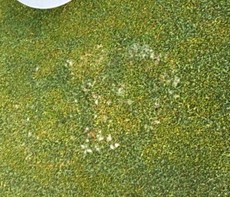
The disease tends to be most severe on greens with low N, low moisture, and/or other environmental stress. Creeping bentgrass can be affected and often shows a more orange/brown sunken circular ring appearance compared to Poa annua. Cultural control is best done by reducing stress through adequate fertilization and/or irrigation. Fungicides in the DMI and QoI classes (i.e. ProtectMAX® Tebuconazole, Azoxy, Fluoxastrobin), as well as the active ingredient fludioxonil (Tuque/Medallion®) and Polyoxin-D (Affirm®), have all shown to be highly effective in managing this disease.
Turfgrass Disease - Gray
Leaf Spot
Gray leaf spot can cause widespread damage in certain grass
species including perennial ryegrass, tall fescue, and St. Augustinegrass. In
the cool-season region, the epidemics tend to occur in the late summer and
early fall. Gray leaf spot is caused by the fungal organism Pyricularia grisea
which is favored by warmer air temperatures between 82-90F. The disease really
ramps up during periods of heavy rainfall and high humidity. Symptoms can
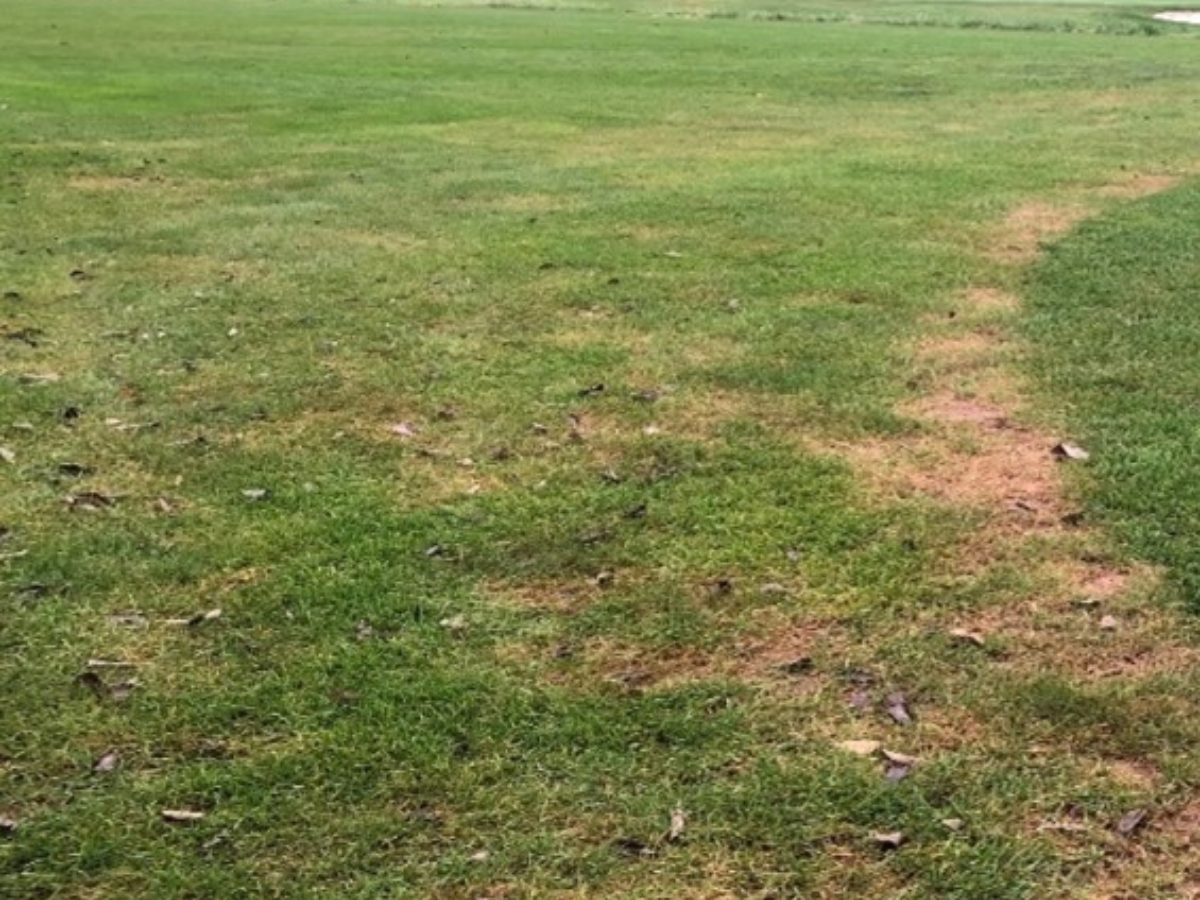
sometimes be difficult to discern as they can be confused with drought,
Pythium, or other abiotic summer stress. One key indicator in the early stages of
infection can be a brown circular lesion on the leaf blades that has a dark
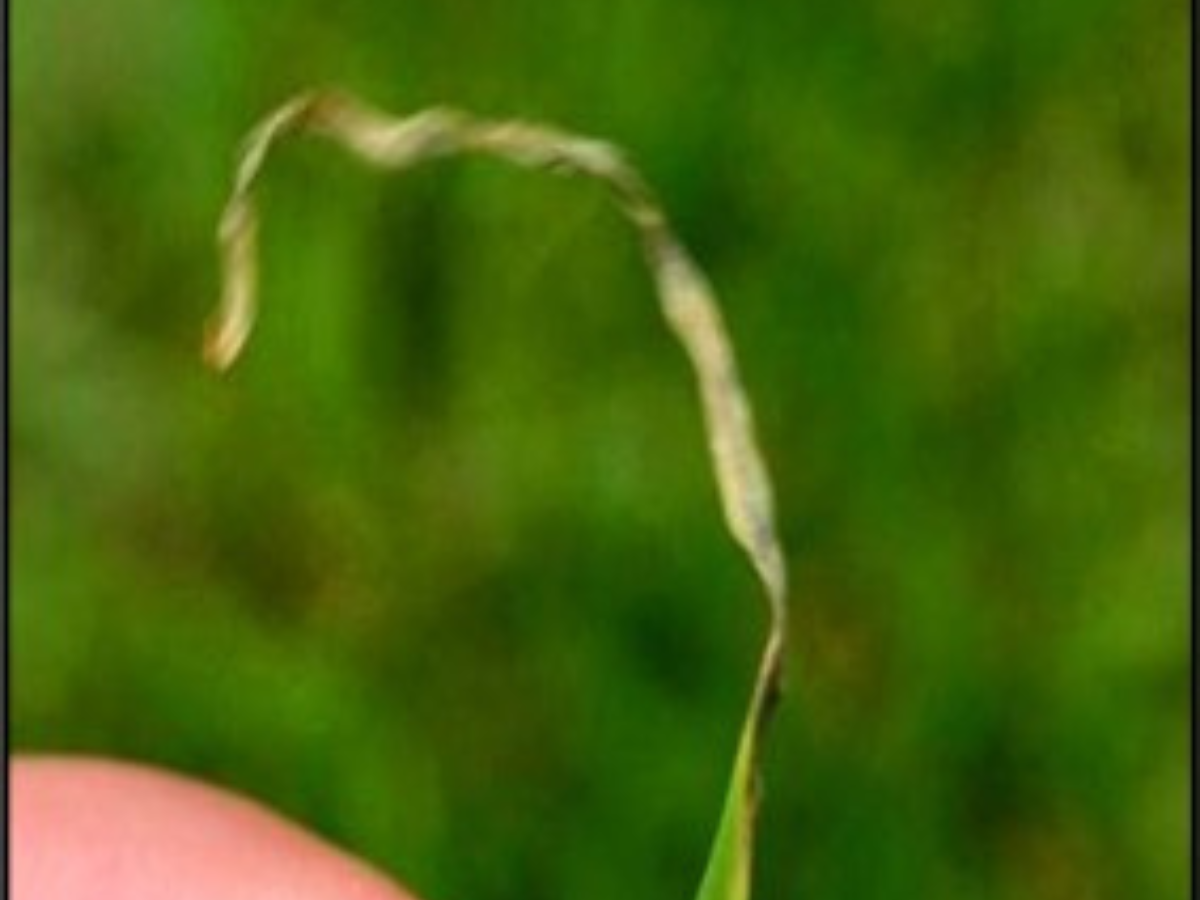
purple or black margin around it. A shepherd’s crooking of the leaf tips on
affected areas are often a good indicator of gray leaf spot as well.
Cultural controls include maintaining turf as dry as
feasible and limiting late summer flushes of growth from high N inputs.
Seedlings are highly susceptible to gray leaf spot, so in situations where
renovations are occurring, consider waiting to seed until mid-late fall in
areas with historical gray leaf spot threat. Preventative fungicide programs
are key to keep this disease from spreading rapidly during conducive weather.
Applications are often necessary on 14- to 21-day intervals with products like
ProtectMAX Tebuconazole, Propiconazole, Chlorothalonil, and T-Methyl.
Contact Your Harrell’s
Representative
Keeping an eye out for disease and having the right products
on hand is key to prevention and control. Your local Harrell's Representative is here to help you develop the perfect program for you and to help diagnose
diseases plaguing your turf. Never hesitate to reach out to them or one of our
TurPh.Dudes, we’re here to help!
Related Resources

In addition to being the nation’s largest distributor of branded fungicides, herbicides, and insecticides, Harrell’s produces custom-blended fertilizers, specialty liquids, and wetting agents. Additionally, Harrell’s is the exclusive US owner, formulator, and distributor of all POLYON® branded products.
TEAM HARRELL'S
STAY EQUIPPED
Never stop learning. Access FREE continuing education courses from Harrell’s.
LET'S GROW
PRESS RELEASES
PRESS RELEASES
STAY EQUIPPED
Never stop learning. Access FREE continuing education courses from Harrell’s.
LET'S GROW